
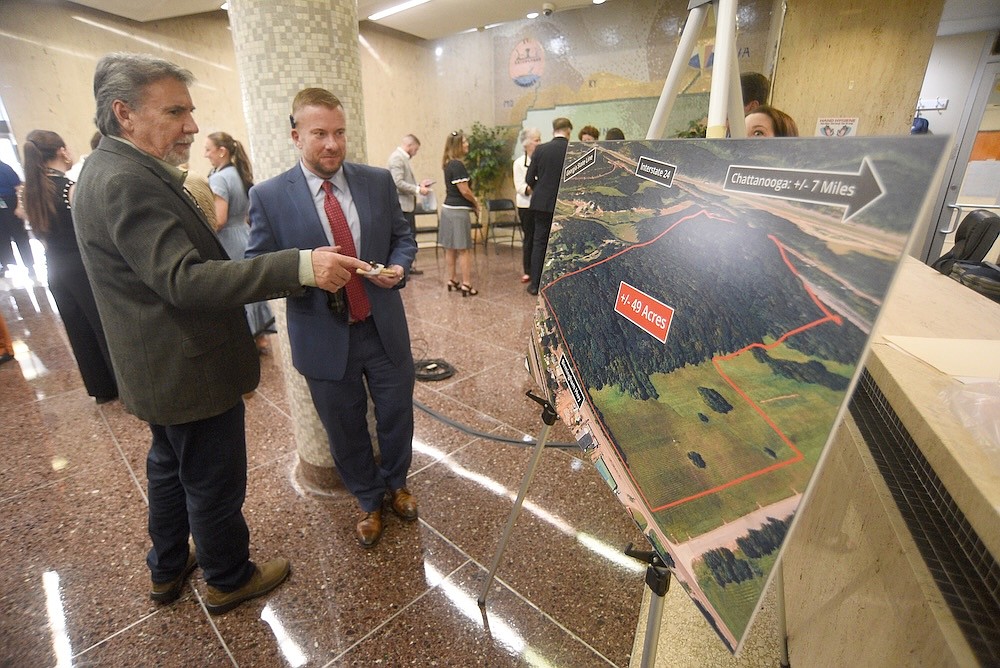
State officials have finally selected a location for the new Moccasin Bend Mental Health Institute, announcing a nearly 50 acre site situated between Chattanooga’s Lookout Valley community and the Georgia state line. The 260 million dollar project will move the facility roughly four miles southwest of its current home, providing a modern environment with a capacity for up to 200 beds. This decision marks a major shift in strategy following Governor Bill Lee’s previous insistence that no new construction occur on Moccasin Bend itself, a site revered for its immense historical and cultural significance to the region.
Marie Williams, Commissioner of the Tennessee Department of Mental Health and Substance Abuse, described the announcement as an incredible milestone for inpatient care serving 52 counties across East Tennessee. State Senator Bo Watson noted that the selection followed an exhaustive search involving the evaluation of 127 different sites over three years. Local leadership, including Chattanooga Mayor Tim Kelly and Hamilton County Mayor Weston Wamp, praised the move as a victory for conservation, arguing that relocating the hospital allows Moccasin Bend to transition into a landmark public historic park.
However, the announcement was not met with universal celebration. Members of the Lookout Valley community expressed shock and frustration over what they described as a secretive process. City Council member Chip Henderson criticized the lack of transparency, stating that residents were not engaged before the state moved forward with the property deal. He raised specific concerns regarding how local infrastructure and narrow roads would handle increased traffic flow once the facility opens.
Despite these tensions, Commissioner Williams maintained that there is ample time to collaborate with local citizens before construction concludes in the summer of 2030. While Henderson emphasized that he supports the need for improved mental health facilities but opposes this specific location, state officials remain confident that the site meets all necessary requirements. For now, hospital staff and administration are looking forward to replacing their aging 165 bed facility with a state of the art center designed for future generations.