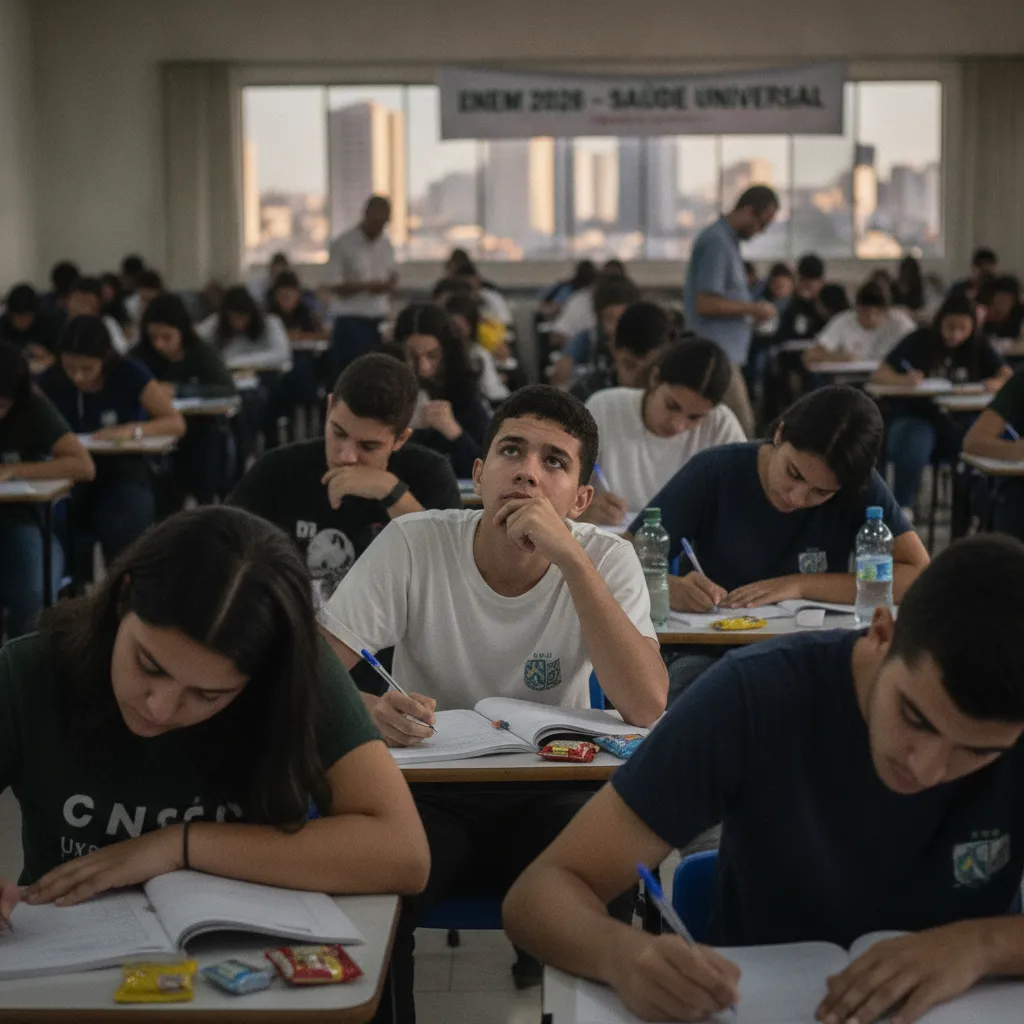
Millions of Brazilian students sat for the 2026 National High School Examination, known as Enem, facing an essay prompt that asked them to reflect on the vital role of the Unified Health System as a universal right. The topic arrived at a politically charged moment, coinciding with presidential elections and intense debates over whether to decouple health spending from government revenue to meet fiscal targets. While the public system manages millions of procedures annually for the entire population, it continues to operate on a significantly smaller budget than the private sector, which serves only a quarter of the citizens.
Participation reached its highest level since 2020, with over five million candidates registering for the tests. This surge was largely driven by a new Ministry of Education policy that automatically registers public high school seniors, alongside expanded fee waivers for low income families and participants in federal savings programs. Despite a slight rise in absenteeism due to these automatic enrollments, Education Minister Leonardo Barchini hailed the turnout as a historic milestone for accessibility in public education.
President Luiz Inácio Lula da Silva underscored the symbolic weight of the exams during a visit to agency headquarters, framing higher education as a critical battle against societal backwardness. He specifically noted the strong presence of women, who made up nearly two thirds of all applicants. For many students, however, the challenge lay in navigating the nuances of the essay prompt. Educators warned that while praising the healthcare system was easy, top marks would require students to critically analyze systemic failures like long waitlists and regional inequalities in care quality.
By sticking to a social theme rather than pivoting toward technology or climate change, examiners tapped into memories of the pandemic era to gauge student awareness of civic rights. Teachers observed that this year’s prompt was uniquely open ended, forcing writers to move beyond simple criticism and instead propose concrete interventions to make constitutional guarantees of health more effective across Brazil’s vast territory.