
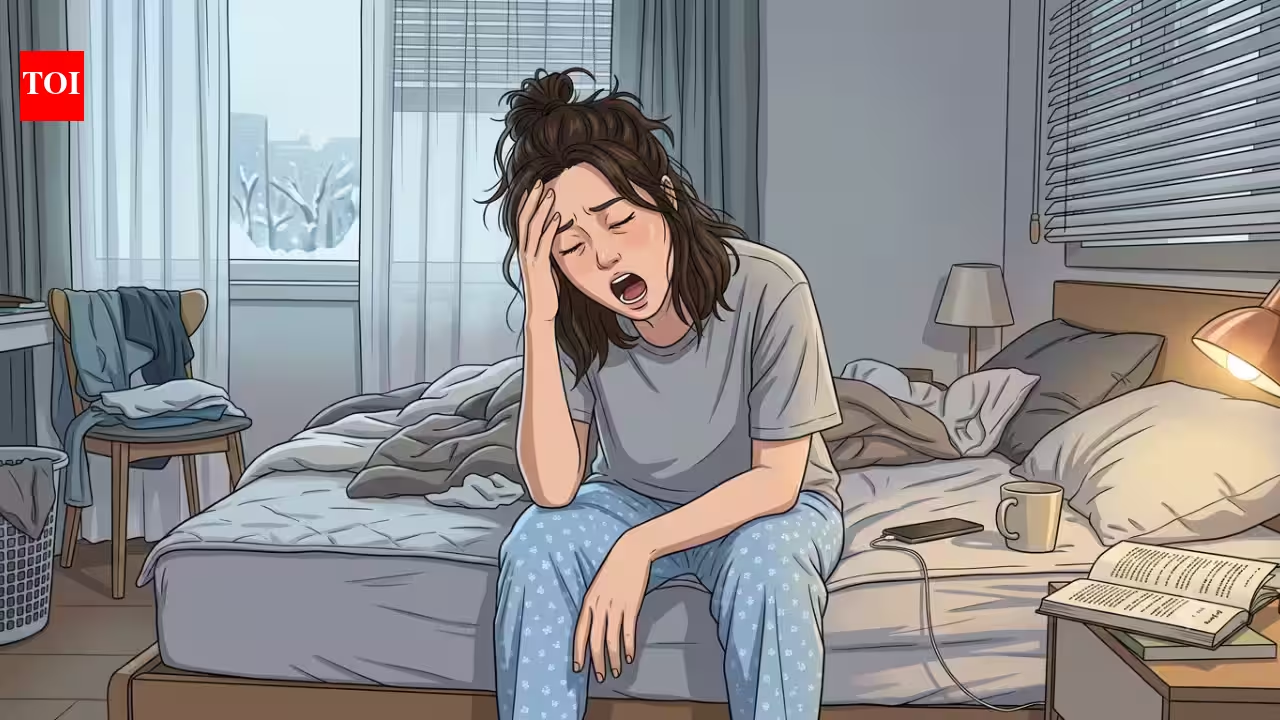
Many people believe that the secret to a great night of sleep lies in how long they can push themselves to stay awake, operating under the assumption that increasing sleep pressure will lead to deeper rest. However, medical experts suggest that focusing on a specific number of waking hours is a misguided approach. According to Dr. Pavan Yadav M V, a senior consultant in sleep medicine at KIMS Hospitals in Bengaluru, there is no scientifically defined ideal number of hours a healthy adult should stay awake. Instead, the real key to health is the balance between restorative sleep and a consistent daily rhythm.
While organizations like the CDC and the American Academy of Sleep Medicine recommend that most adults get at least seven hours of sleep per night, these figures should not be used to calculate a mandatory window of wakefulness. For some, that means being awake for seventeen hours; for others, fifteen. The danger arises when people deliberately extend their waking hours to force better sleep, which can actually backfire by disrupting the circadian rhythm. When late nights and bright lights clash with our biological clocks, we may find ourselves physically exhausted yet unable to fall asleep because our internal systems are out of alignment.
The consequences of ignoring this balance go far beyond simple tiredness. Chronic sleep deprivation often manifests first as irritability, forgetfulness, and diminished concentration. Over time, however, these symptoms can evolve into serious systemic health issues including hypertension, diabetes, and cardiovascular disease. Dr. Pavan specifically highlights the metabolic toll of poor sleep, noting that chronic deprivation interferes with the hormones regulating appetite and metabolism, which frequently leads to increased hunger and weight gain.
Distinguishing between ordinary fatigue and true sleep deprivation is essential for maintaining long term health. While normal tiredness usually follows a clear cause—such as a stressful project or intense exercise—and vanishes after a good night’s rest, sleep deprivation is persistent. One of the most telling warning signs is involuntary daytime sleepiness or an overreliance on caffeine just to function. Experts warn that if someone consistently sleeps for eight hours but still feels exhausted or snores loudly, it may indicate an underlying disorder rather than a lack of wake time, making it crucial to consult a professional rather than simply trying to stay awake longer tomorrow.